
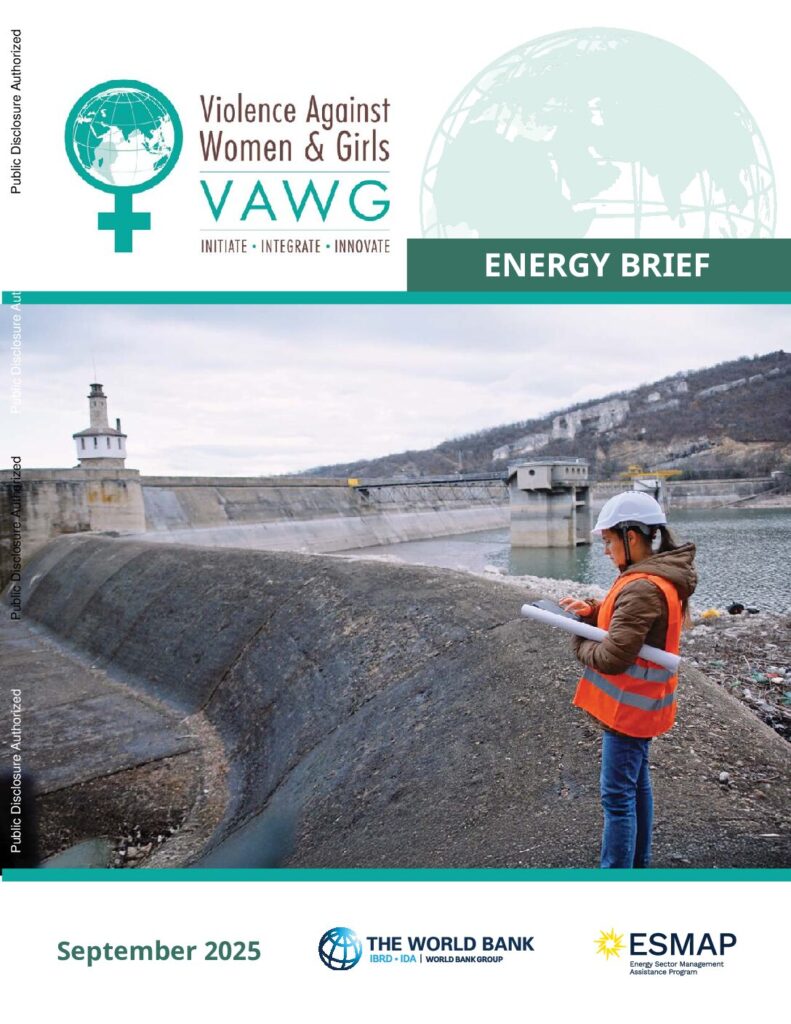
Violence against women and girls resource guide – Energy Brief
This resource guide explores how infrastructure development, limited energy access, rising costs, workplace inequality, digitalisation and the energy transition can create or intensify these risks. It also shows how gender-responsive energy policies and projects can strengthen women’s safety, agency and economic participation.
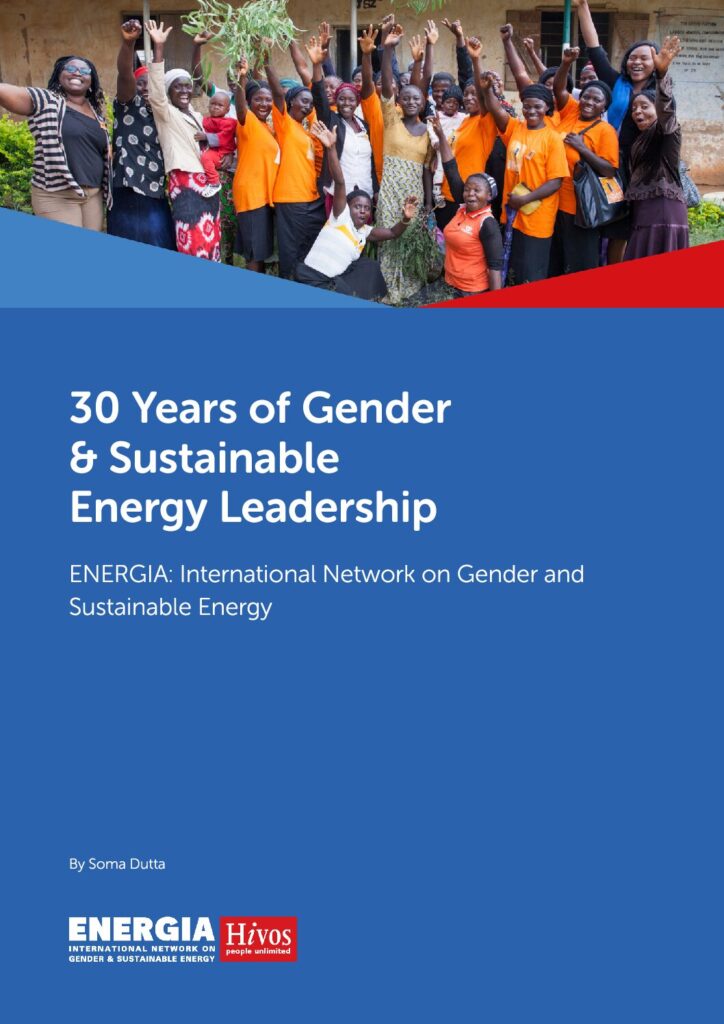
30 Years of Gender & Sustainable Energy Leadership
Since its founding in 1996, ENERGIA has grown from a small awareness-raising newsletter into a global network of more than 140 partners in 26 countries. It is now recognized as an authority on gender, sustainable energy, and climate justice. This report, written by Soma Dutta, traces that 30-year journey. It shows how ENERGIA helped secure…
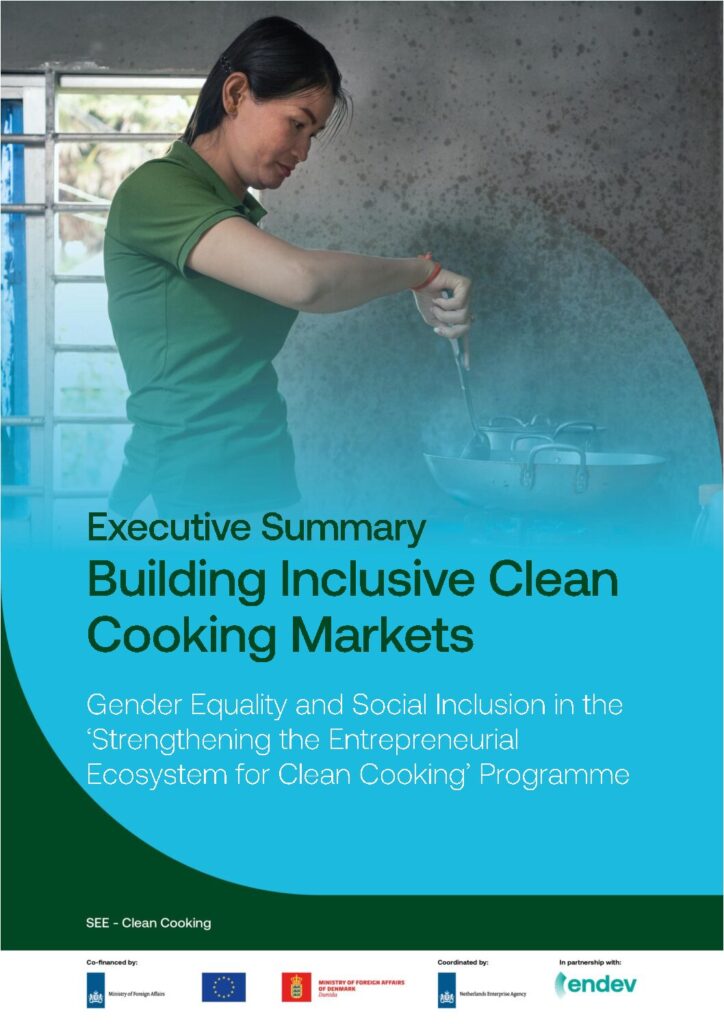
EXECUTIVE SUMMARY – Building Inclusive Clean Cooking Markets
EXECUTIVE SUMMARY How can clean cooking markets become more inclusive, resilient, and effective? Drawing on lessons from the Strengthening the Entrepreneurial Ecosystem for Clean Cooking (SEE Clean Cooking) programme across eight countries in Africa and Asia, this publication presents a practical framework for integrating gender equality and social inclusion (GESI) into market systems development. It…
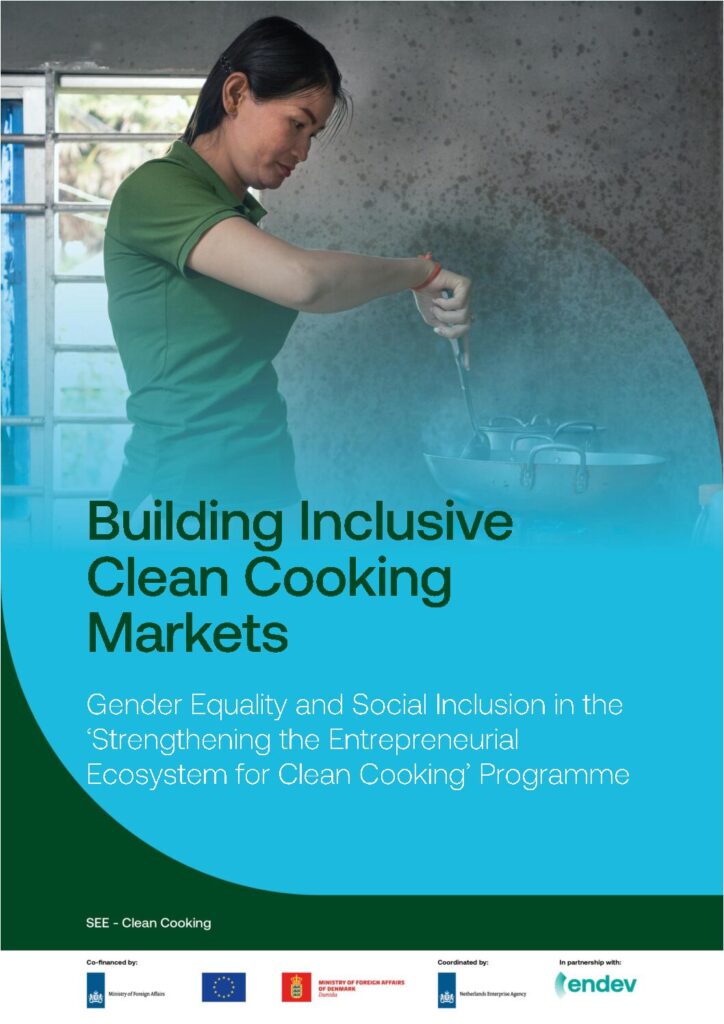
Building Inclusive Clean Cooking Markets: Gender Equality and Social Inclusion in the ‘Strengthening the Entrepreneurial Ecosystem for Clean Cooking’ Programme
How can clean cooking markets become more inclusive, resilient, and effective? Drawing on lessons from the Strengthening the Entrepreneurial Ecosystem for Clean Cooking (SEE Clean Cooking) programme across eight countries in Africa and Asia, this publication presents a practical framework for integrating gender equality and social inclusion (GESI) into market systems development. It demonstrates how…
SDG 7 & Gender Gaps: Towards a Feminist Framework
The absence of gender-responsive indicators within SDG 7 has created a structural barrier to understanding and addressing women’s energy use and needs. As a result, progress for women and girls as part of this SDG cannot be adequately tracked, measured, or achieved. A feminist framework for energy justice must move beyond access alone and address…
Accelerating Action on SDG7 and Its Interlinkages for a Final Push Towards 2030
Sustainable Development Goal 7 — ensuring access to affordable, reliable, sustainable and modern energy for all — stands out as one of the brightest areas of progress across the 2030 Agenda. Over the last decade, more people have gained access to electricity than ever before, and the clean energy transition has gained irreversible momentum. Yet,…
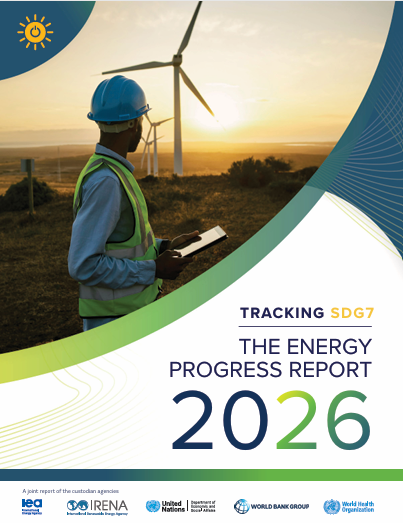
Tracking SDG 7 – 2026 Report
Despite substantial progress since 2015—including significant increases in the share of renewable energy in the global energy mix and improvements in the global rate of energy efficiency—the achievement of the 2030 target of universal access to affordable, reliable, and modern energy services remains off track and uneven, particularly with respect to the huge remaining energy…
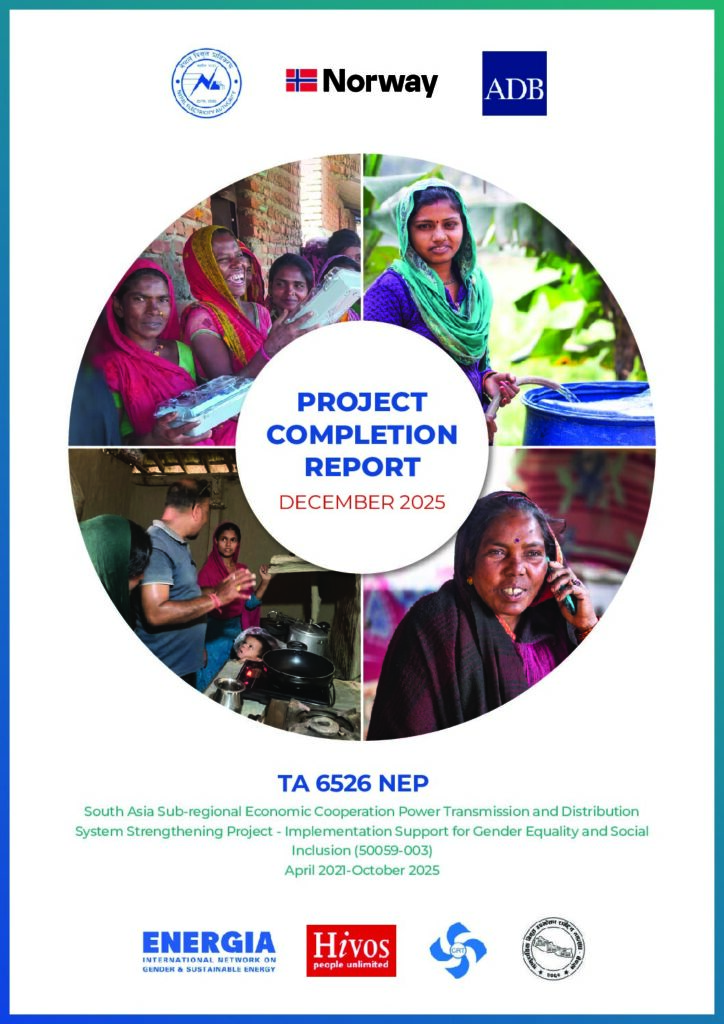
TA 6526 NEP – Project Completion Report
This is the project completion report of TA 6526 NEP and presents the key activities and results of the project, in relation to the scope of work and objectives set out in the Terms of Reference (ToR) and the contract. The activities and results relate to two main outputs: Output 1: Strengthened capacity of NEA…
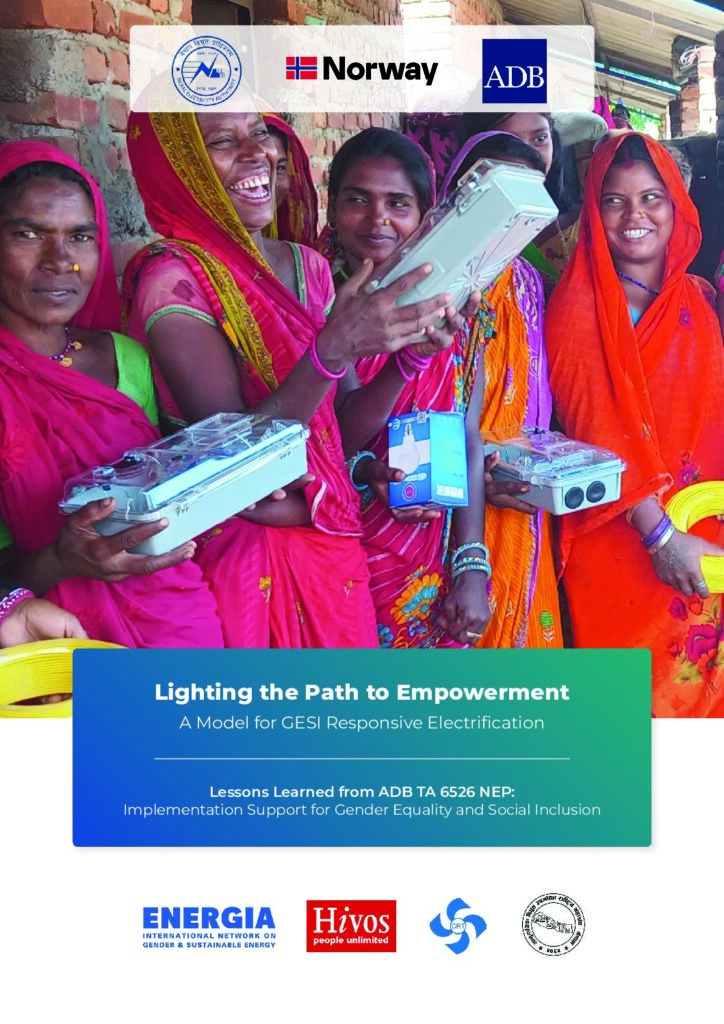
Lighting the Path to Empowerment: A Model for GESI Responsive Electrification
Between 2021 and 2025, the ADB TA 6526 NEP project demonstrated that electrification becomes transformative when it purposefully integrates Gender Equality and Social Inclusion (GESI) principles and approaches. The project reached electricity to 1,300 previously unelectrified households, supported 403 entrepreneurs (primarily women and disadvantaged groups) to create new business opportunities and strengthen existing business ventures…
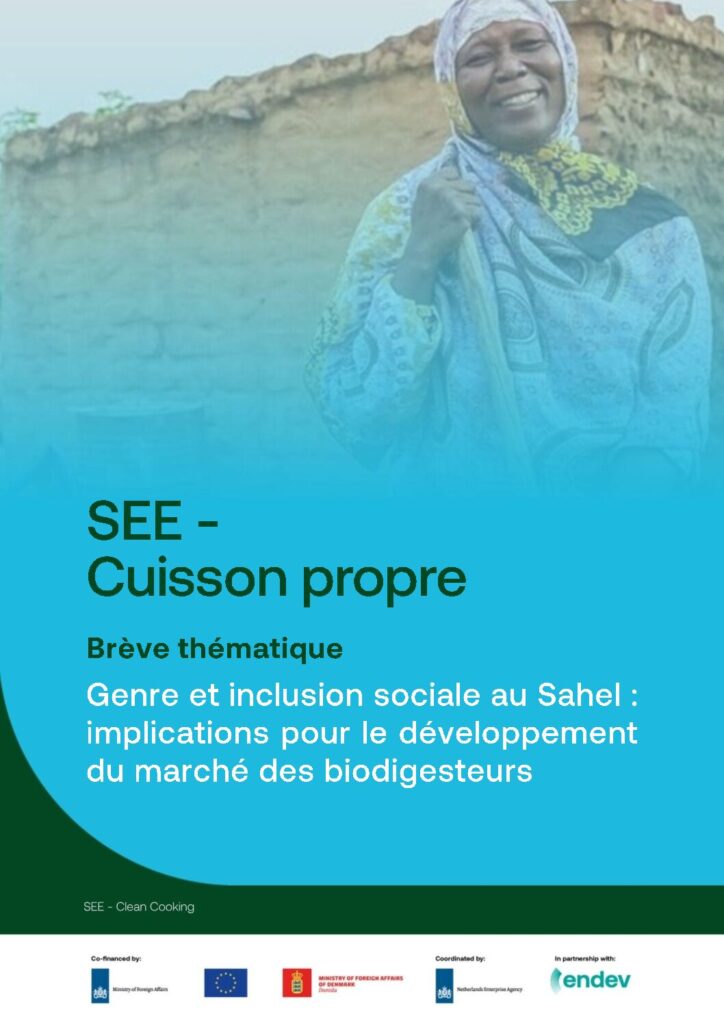
Genre et inclusion sociale au Sahel: Implications pour le développement du marché des biodigesteurs
Les femmes jouent un rôle central et multiforme sur le marché des biodigesteurs domestiques en Afrique subsaharienne. Elles sont les principales utilisatrices et décideuses, et de plus en plus entrepreneuses et leaders dans les chaînes de valeur des biodig esteurs et des engrais d’effluents . Leur participation au marché des biodigesteurs est essentielle à l’adoption…
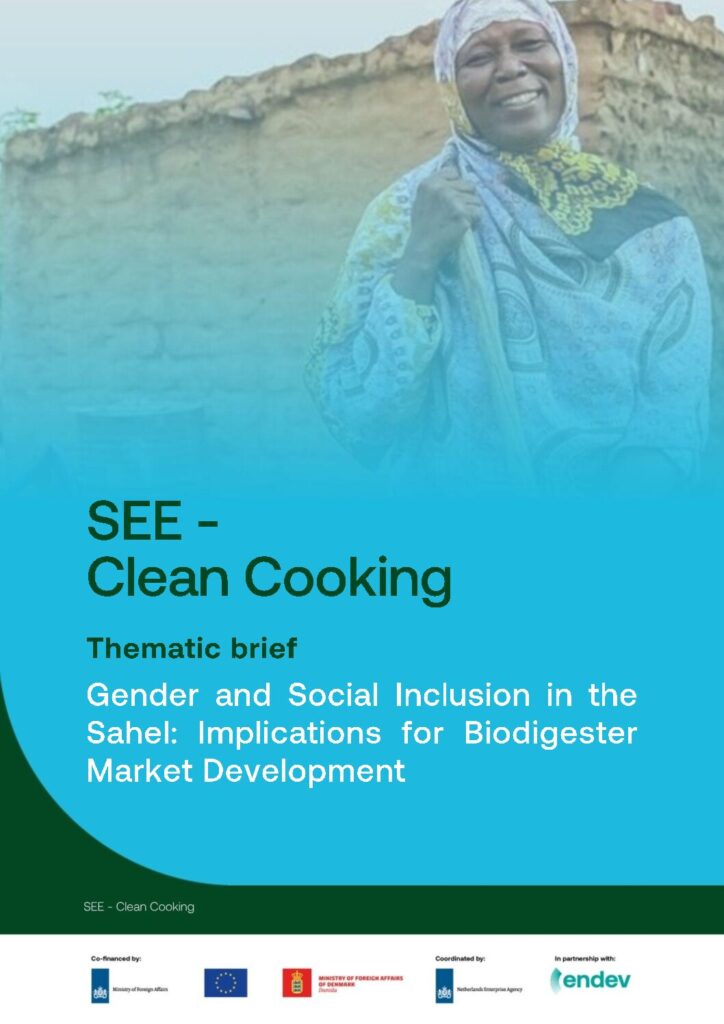
Gender and Social Inclusion in the Sahel: Implications for Biodigester Market Development
Women play a pivotal, multifaceted role in the market for household biodigesters in Sub-Saharan Africa, acting as primary users and decision-makers, and increasingly as entrepreneurs and leaders in the biodigester and bioslurry fertiliser value chains. Their participation in the biodigester market is critical for the adoption and sustained use of the technology, and to long-term…
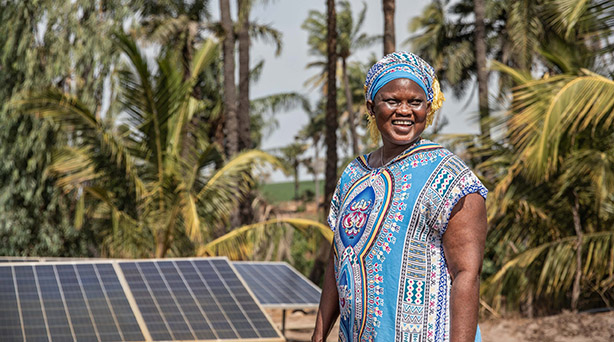
Women Driving the Energy Transition and Climate Justice: Impact Assessment of Women’s Economic Empowerment
This Impact Assessment evaluates the economic empowerment of women entrepreneurs in the clean energy sector as a result of ENERGIA’s support, delivered via its partner organizations. The assessment focuses on determining how ENERGIA’s Phase 7 program has contributed to changes in the lives of women entrepreneurs, specifically in relation to decision-making, resilience, and business development.
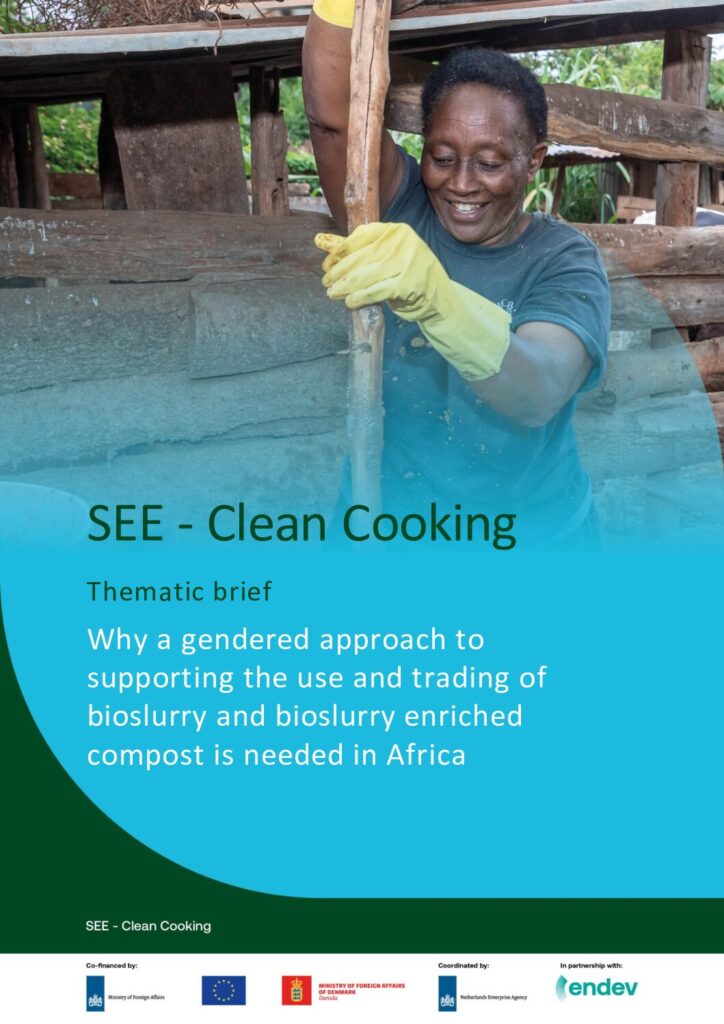
Why a gendered approach to supporting the use and trading of bioslurry and bioslurry enriched compost is needed in Africa
In Sub-Saharan Africa, women play a central role in managing household food, energy and water, often cultivating smaller and more degraded plots with limited access to inputs such as fertilizer, finance and markets. Rising fertilizer prices and declining soil quality further constrain their productivity and incomes. Locally produced organic fertilizers like bioslurry and bioslurry-enriched compost…
Looking Forward: Future Proofing SDG 7 Indicators Post-2030 for Equity, Outcomes, and Interlinkages
This policy brief examines the shortcomings of the current SDG 7 indicators on affordable and clean energy and proposes forward-looking approaches to strengthen them in the post-2030 agenda. Although energy is central to sustainable development, existing indicators lack demographic disaggregation, rely heavily on input-level metrics such as financial flows, and fail to capture interlinkages with…
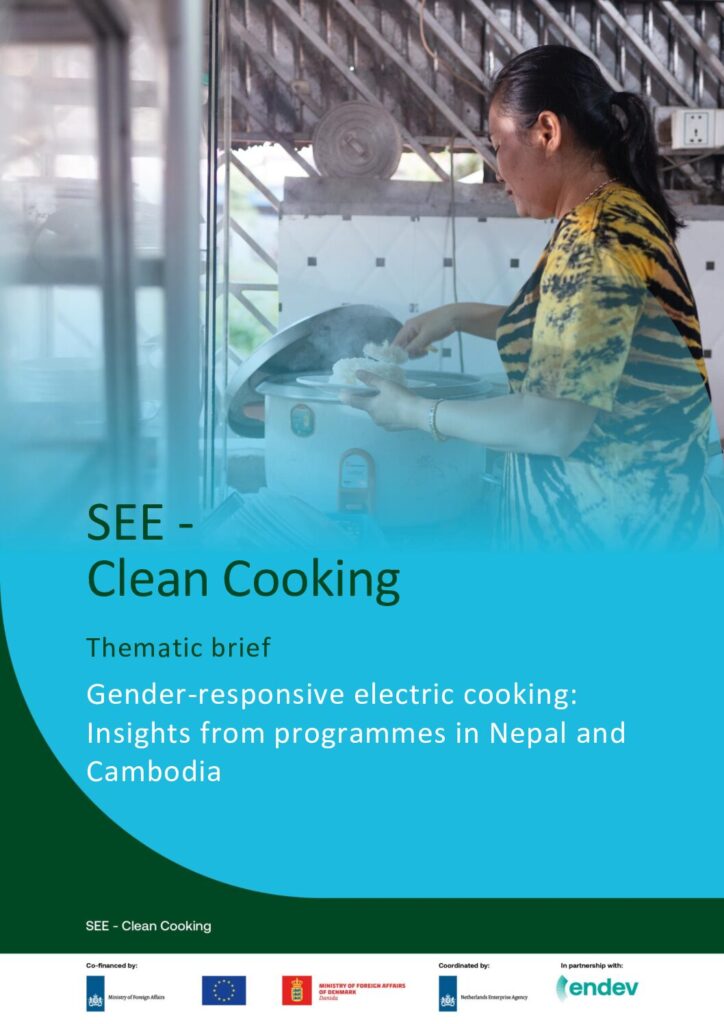
Gender-responsive electric cooking: Insights from programmes in Nepal and Cambodia
In the last decade or so, interest in electric cooking (e-cooking) has increased in many countries in the global South. As more households aspire to a modern lifestyle, the retail market for electric cooking devices is growing, especially in urban areas, even though the potential is far from being realized. These include appliances such as…
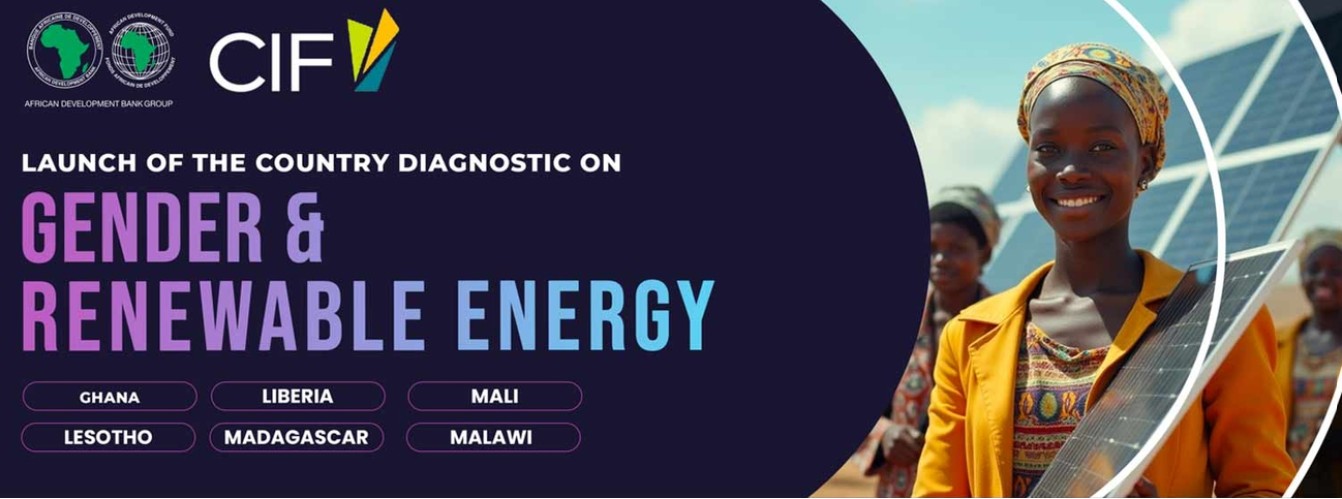
Country Diagnostic Studies on Gender and Renewable Energy
In 2025, the African Development Bank, with support from the Climate Investment Funds (CIF) under the Scaling Up Renewable Energy Program (SREP), has developed a series of Country Diagnostic Studies on Gender and Renewable Energy for Ghana, Liberia, Mali, Lesotho, Madagascar, and Malawi. These studies aim to strengthen the integration of gender equality in national energy strategies…